
TDEE Calculator
Accurately estimate your Total Daily Energy Expenditure using the Mifflin-St Jeor formula to tailor your calorie intake for weight loss, muscle gain.
Visit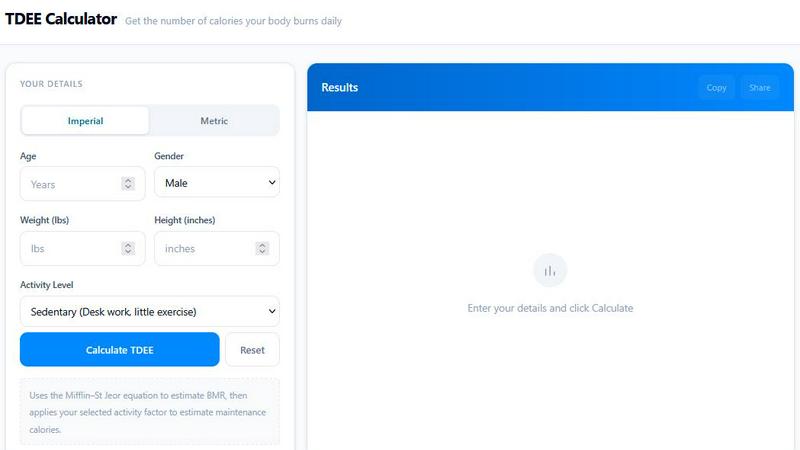
About TDEE Calculator
The TDEE Calculator is a fast, accurate, and completely free online tool designed to estimate your Total Daily Energy Expenditure (TDEE). This is the total number of calories your body burns in a single day, encompassing everything from basic life-sustaining functions to physical activity. By providing your age, sex, height, weight, and activity level, you receive an instant calculation of your maintenance calories, along with practical targets for fat loss, muscle gain, or weight maintenance. The tool is built for anyone looking to take control of their nutrition and body composition, whether you are a fitness enthusiast, an athlete, or someone simply starting their health journey. Its main value proposition lies in its use of the scientifically validated Mifflin-St Jeor equation, which provides a reliable estimate based on real physiology rather than guesswork. Beyond the baseline calorie number, the calculator offers helpful insights, including calorie deficit and surplus recommendations, macro guidance, and activity-based adjustments. This allows you to create a personalized nutrition plan that fits your specific lifestyle and goals. The interface is designed for speed and clarity, making it easy to get your results and start applying them immediately. The tool also includes educational content explaining what TDEE is, why it matters, and how to use your results effectively, empowering you to make informed decisions about your diet and training.
Features of TDEE Calculator
Scientifically Validated Calculation
The calculator uses the Mifflin-St Jeor equation, a formula extensively researched and published in the American Journal of Clinical Nutrition, to estimate your Basal Metabolic Rate (BMR). This equation is recognized as one of the most accurate methods for estimating resting metabolic rate in healthy adults. Your BMR is then multiplied by a carefully selected activity factor to calculate your total daily energy expenditure, providing a reliable and trustworthy starting point for your nutritional planning.
Customizable Activity Level Selection
Understanding that no two people have the same daily routine, the tool offers five distinct activity levels ranging from Sedentary (desk work, little exercise) to Athlete (twice-daily training or very active work). Each level is clearly defined with examples of typical daily movement and exercise frequency. This allows you to select the option that most accurately reflects your lifestyle, ensuring the final TDEE calculation is as personalized and relevant as possible to your specific energy needs.
Instant Calorie Deficit and Surplus Recommendations
Once your maintenance calories are calculated, the tool provides immediate and practical targets for your specific goals. It offers a recommended calorie deficit for fat loss and a calorie surplus for muscle gain. This feature eliminates the guesswork from diet planning, giving you clear, actionable numbers to start with. It provides a structured framework, suggesting a moderate deficit or surplus that is effective for most people without being overly aggressive or unsustainable.
Educational Insights and Practical Guidance
The TDEE Calculator is more than just a number generator; it is an educational resource. It includes a comprehensive "What is TDEE?" section that explains the concept in simple terms, covering BMR, the thermic effect of food, and activity energy expenditure. It also provides guidance on how to use your TDEE estimate effectively, including instructions on monitoring your weight over 2-3 weeks and making small adjustments based on real-world results. This empowers users to refine their approach over time.
Use Cases of TDEE Calculator
Structured Weight Loss Planning
For individuals aiming to lose body fat, the TDEE Calculator provides a critical starting point. By calculating your maintenance calories, you can establish a safe and effective calorie deficit, typically between 250 and 500 calories per day. This creates the energy shortfall required for fat loss without triggering metabolic slowdown or extreme hunger. The calculator gives you a concrete daily calorie target, which you can then use to plan meals, track your food intake, and monitor your progress over several weeks.
Muscle Gain and Bulking Phases
For those focused on building muscle, knowing your TDEE is essential for a successful bulking phase. The calculator provides a recommended calorie surplus, usually around 200 to 350 calories above maintenance. This surplus provides the extra energy your body needs to synthesize new muscle tissue, especially when combined with a proper resistance training program. Using the calculator helps you avoid excessive fat gain by ensuring you eat just enough to support muscle growth without a massive surplus.
Weight Maintenance and Performance Optimization
Athletes and active individuals can use the TDEE Calculator to find their precise maintenance calories. This is crucial for sustaining energy levels during training, supporting recovery, and maintaining a stable body weight. By eating at their TDEE, they can ensure they are fueling their performance adequately without unwanted weight gain or loss. This is particularly useful during competitive seasons where maintaining a specific weight class or body composition is critical for performance.
Personalized Meal Planning and Macronutrient Distribution
Once you have your daily calorie target from the TDEE Calculator, you can use it as the foundation for a detailed meal plan. The tool's guidance helps you divide your total calories into specific goals for protein, carbohydrates, and fats. This allows you to tailor your diet to your training style, whether you need higher carbohydrates for endurance sports or higher protein for muscle repair. This structured approach turns an abstract calorie number into a practical, daily eating strategy.
Frequently Asked Questions
What does TDEE mean?
TDEE stands for Total Daily Energy Expenditure. It is the total number of calories your body burns in a 24-hour period. This includes the energy used for basic life functions (your Basal Metabolic Rate), the energy required to digest and process food (the thermic effect of food), and the calories burned through all forms of physical activity, from walking and fidgeting to intense exercise. Knowing your TDEE is essential for understanding how many calories you need to eat to lose, gain, or maintain your weight.
How is TDEE different from BMR?
BMR, or Basal Metabolic Rate, is the number of calories your body needs to perform basic life-sustaining functions like breathing, circulation, and cell production while at complete rest. TDEE is a larger number that includes your BMR plus all other energy expenditure. Think of BMR as the baseline "idle" cost of being alive, while TDEE is the total cost, including all your daily movement and exercise. The TDEE Calculator first estimates your BMR and then multiplies it by an activity factor to arrive at your TDEE.
How accurate is this calculator?
The TDEE Calculator uses the Mifflin-St Jeor equation, which is one of the most accurate and well-validated formulas for estimating BMR in the general population. However, it is important to treat the result as an excellent starting estimate, not a perfect, fixed number. Individual metabolic rates can vary due to genetics, body composition, and other factors. The most accurate way to use the calculator is to follow its estimate for 2-3 weeks, monitor your weight, and then adjust your calorie intake by about 100-200 calories based on your real-world results.
Should I recalculate after losing weight?
Yes, absolutely. As you lose weight, your body requires fewer calories to function because there is less mass to maintain. Your BMR and your TDEE will both decrease. To continue losing weight at the same pace, you will need to adjust your calorie intake downward. It is a good practice to recalculate your TDEE every time you lose 10-15 pounds or after a significant change in your activity level to ensure your calorie targets remain accurate and effective for your new body weight.
Similar to TDEE Calculator

Pawjojo is a pet health tracking app that turns quick logs of meals, meds, weight, and symptoms into trends, early warnings, and vet-ready reports.

Holly AI is an AI receptionist that automates scheduling and front desk tasks to reduce burnout and help your clinic grow.

Droidal Insurance Verification AI Agent streamlines real-time eligibility checks, reducing denials and ensuring accurate insurance data before.