
Kelda
Kelda cross-references your labs, medications, symptoms, and wearable data to reveal hidden health patterns that standard tests miss.
Visit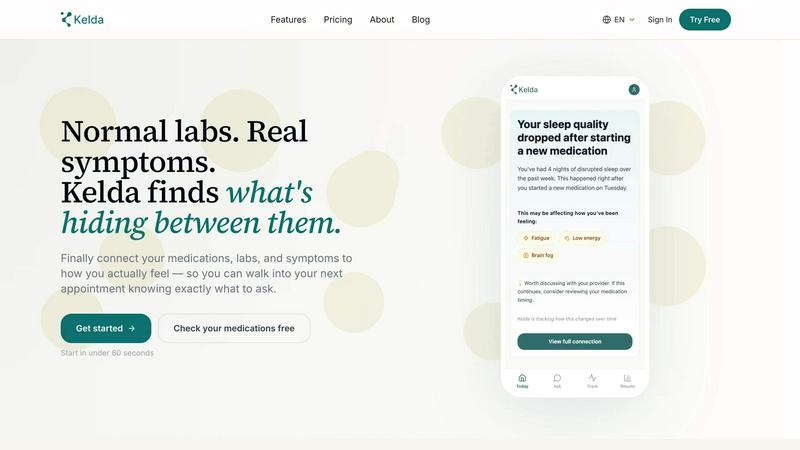
About Kelda
Kelda is a comprehensive health and wellness platform designed to help individuals understand the complex connections between their medications, nutrients, biomarkers, symptoms, and overall wellbeing. The platform addresses a critical gap in modern healthcare: the tendency for providers to treat symptoms in isolation without examining how different factors interact. Many patients experience frustrating scenarios where their lab results come back "within range" yet they continue to feel unwell, their medications are never cross-checked against their nutritional status, and no one connects their symptoms to underlying root causes. Kelda solves this by combining educational resources, structured health content, and practical insights into a single, accessible platform. The product is built for anyone who has visited multiple doctors, undergone numerous tests, and still feels stuck without answers. It is particularly valuable for individuals managing chronic conditions such as PCOS, hypothyroidism, iron deficiency, B12 deficiency, endometriosis, perimenopause, fibromyalgia, insulin resistance, IBS, Hashimoto's, chronic fatigue, anxiety, depression, migraines, and autoimmune conditions. Kelda helps users move from confusion to clarity by cross-referencing medications, labs, symptoms, and wearable data to find patterns that are easy to miss in fragmented care. The platform stays focused on each user's unique records and health patterns around the clock, empowering them to walk into medical appointments more informed and have more productive conversations with their healthcare providers. Kelda simplifies complex health information and makes it easier to explore how prescriptions, vitamin status, and lab results may relate to energy, mood, metabolism, and long-term health patterns.
Features of Kelda
Medication to Nutrient Depletion Analysis
Kelda identifies how specific medications may be depleting essential nutrients from your body. For example, the platform can reveal that omeprazole may be depleting magnesium, which is commonly linked to fatigue, cramps, and poor sleep. This feature cross-references your current prescriptions against a comprehensive database of known drug-nutrient interactions, helping you understand potential side effects that your doctor may not have mentioned. By identifying these depletion patterns, Kelda enables you to take proactive steps to address nutritional gaps before they lead to more significant health issues.
Optimal Lab Range Interpretation
Unlike standard lab reports that only flag results outside the "normal range," Kelda provides a more nuanced analysis by identifying when your biomarkers are suboptimal. For instance, if your ferritin level is 25, your doctor may say it is normal, but Kelda recognizes that the optimal threshold for preventing hair loss and maintaining energy starts at 70. This feature helps users understand the difference between being "within range" and being truly healthy, allowing them to address deficiencies that conventional medicine might overlook.
Multi-Data Pattern Detection
Kelda integrates your labs, medications, symptoms, and wearable data into a single, unified view to detect meaningful patterns. The platform can identify correlations such as a drop in sleep quality after starting a new medication, or shifts in energy and mood that coincide with changes in your supplement regimen. By analyzing data from multiple sources simultaneously, Kelda reveals connections that would be nearly impossible to spot manually, giving you a clearer picture of how your lifestyle and treatments interact with your overall health.
Comprehensive Condition Cross-Referencing
Kelda goes beyond surface-level symptom tracking by cross-referencing your data against a wide range of conditions, including hormonal imbalances, gut inflammation, nutrient deficiencies, and complex syndromes like mast cell activation, histamine intolerance, drug-induced nutrient depletion, thyroid conversion failure, and HPA axis dysregulation. This feature helps uncover underlying conditions that may have been missed by previous healthcare providers, providing a more complete diagnostic picture and guiding more effective treatment strategies.
Use Cases of Kelda
Unexplained Chronic Symptoms After Normal Lab Results
Many individuals experience ongoing fatigue, brain fog, or other symptoms despite receiving lab results that fall within standard reference ranges. Kelda helps these users by analyzing their biomarkers against optimal thresholds rather than just normal ranges. For example, a user with a ferritin level of 25 may be told everything is fine, but Kelda identifies that this level is below the optimal threshold for energy and hair health. This insight empowers the user to discuss targeted supplementation with their doctor, potentially resolving symptoms that have persisted for years.
Medication Side Effect Investigation
When a patient starts a new medication and notices changes in their sleep, mood, or energy levels, it can be difficult to determine whether the drug is the cause. Kelda enables users to input their medication history alongside symptom tracking and wearable data. The platform can detect patterns such as a decline in sleep quality or an increase in anxiety following a new prescription. This use case is particularly valuable for individuals managing multiple medications who need to understand how their treatments interact with each other and with their nutritional status.
Pre-Appointment Health Preparation
Patients often feel rushed or overwhelmed during medical appointments, leaving without having all their questions answered. Kelda helps users prepare by consolidating their medical history, lab results, medication list, and symptom patterns into a clear, organized summary. The platform highlights potential connections and questions to ask, such as whether a specific medication might be depleting a key nutrient or whether a lab value is actually suboptimal. This preparation allows users to have more productive conversations with their healthcare providers and advocate more effectively for their health.
Long-Term Health Pattern Monitoring
For individuals managing chronic conditions like PCOS, Hashimoto's, or autoimmune disorders, understanding long-term trends is critical. Kelda tracks changes in biomarkers, symptoms, and medication responses over time, helping users identify patterns that might indicate disease progression, treatment effectiveness, or the need for adjustments. For example, a user with perimenopause might notice that their magnesium levels decline seasonally, correlating with worsened sleep and mood. This long-term perspective enables proactive management rather than reactive treatment.
Frequently Asked Questions
How does Kelda differ from standard lab report analysis?
Standard lab reports only flag results that fall outside the reference range, which is often quite broad. Kelda goes further by analyzing your biomarkers against optimal thresholds that are associated with true health and wellbeing. Additionally, Kelda cross-references your lab results with your medications, symptoms, and wearable data to identify connections that standard reports miss. For example, your ferritin may be within the normal range but still below the level needed for optimal energy and hair health, and Kelda will flag this.
Is Kelda a replacement for my doctor or healthcare provider?
No, Kelda is not a replacement for medical professionals. It is a health companion designed to help you better understand your own data and prepare for more informed conversations with your healthcare team. Kelda provides evidence-aware insights and identifies patterns, but any changes to your medications, supplements, or treatment plan should always be discussed with and approved by your doctor. The platform is intended to bridge the gap between fragmented healthcare experiences and comprehensive personal health understanding.
What types of data does Kelda integrate?
Kelda integrates multiple data sources to build a complete picture of your health. This includes your lab results (blood work, biomarker panels), medication lists (prescriptions, over-the-counter drugs, and supplements), symptom logs (daily tracking of how you feel), and wearable device data (sleep patterns, heart rate, activity levels). By combining these inputs, Kelda can detect correlations and patterns that would be invisible when examining any single data source in isolation.
How long does it take to get started with Kelda?
You can begin using Kelda in under 60 seconds. The platform is designed for quick setup, allowing you to input your medications and basic health information immediately. Once your data is entered, Kelda begins analyzing connections and surfacing insights. The free medication check feature provides instant feedback on potential nutrient depletions, making it easy to see value from your very first interaction with the platform.
Similar to Kelda

Free online PDF tools to merge, compress, convert, edit, sign, and manage documents—no signup, watermarks, or daily limits.

Anonymous Instagram story and profile viewer for private browsing.

Turn videos, images, PDFs, and files into shareable links with fast uploads and privacy-friendly controls.


Spreadsheet-native work management with AI formulas, dashboards, automation, reporting, and project views for growing teams.

A simpler Google Analytics dashboard for understanding GA4 traffic, pages, users, and performance without the complexity.
