

Alternatives to StockFit API
StockFit API delivers clean, standardized financial data from SEC filings, ready for reliable modeling and backtesting.
Explore 20 alternatives to StockFit API. Compare features, pricing, and find the best fit for your needs.


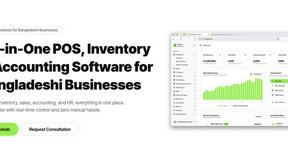
Hishab
All-in-one POS, inventory, accounting and HR software for Bangladeshi SMEs — real-time sales, stock and finance in one place.



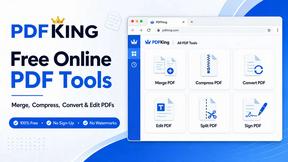
PDFKing
Free online PDF tools to merge, compress, convert, edit, sign, and manage documents—no signup, watermarks, or daily limits.
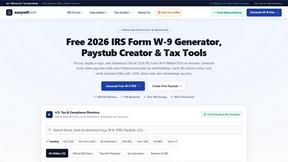
EasyW9Form
Free online tools for tax forms, invoices, and business paperwork for freelancers, contractors, LLCs, and small businesses.
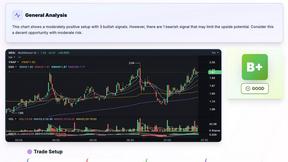
SnapPChart
SnapPChart grades a trading chart screenshot A+ to F, with an entry, stop, targets, and risk/reward. Works on stocks, forex, crypto, futures.
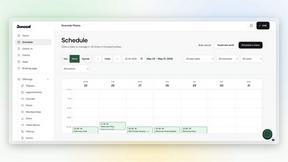
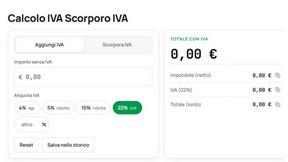
the calcolo iva
TheCalcoloIVA.com helps Italian partite IVA, freelancers, and small businesses calculate VAT, understand tax rules, and stay compliant.
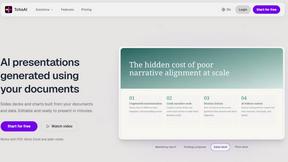
TchoAI
Turn your work into a presentation. Upload a document, paste your notes, or start from a prompt. TchoAI creates clear, editable slides in minutes.
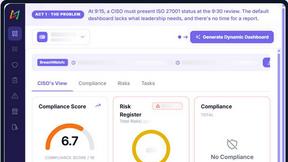
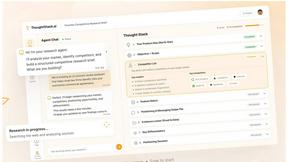
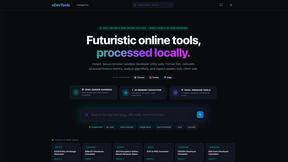
xDevTools
A client-side developer tool suite with 1000+ utilities. Process data locally, nothing is sent to servers.

About StockFit API Alternatives
StockFit API is a financial data platform designed for developers, quants, and research platforms that require direct, reliable access to SEC filing data without the common trade-offs between cost and accuracy. It belongs to the Business & Finance category, specifically within the niche of fundamental financial data providers that pull information directly from SEC XBRL filings to ensure traceability and auditability. Users commonly seek alternatives due to concerns over pricing structures, the need for specific feature sets like insider transaction coverage or ETF exposure modeling, or platform compatibility requirements that may not align with StockFit’s current offerings. When evaluating an alternative to StockFit API, you should prioritize data accuracy and sourcing transparency, ensuring that every financial number can be traced back to its original filing to support rigorous modeling and backtesting. Consider the breadth of coverage, including fundamentals, ownership data, and filing types, as well as how the platform handles complex data nuances like amended filings and non-December fiscal years. Additionally, assess the scalability of the API for your specific use case, whether that involves high-frequency updates, integration with existing workflows, or access to economic models and AI-friendly data formats that can enhance your analytical capabilities.
FAQs about StockFit API Alternatives
What is StockFit API?
StockFit API is a financial data platform built specifically for developers, quants, and research platforms that need direct, reliable access to SEC filing data. It pulls financial data directly from SEC XBRL filings, ensuring every number is traceable back to its original filing for accuracy and auditability. The platform covers fundamentals, ownership data, ETF and mutual fund exposure, insider transactions, and all types of filings, handling complex data like amended filings and non-December fiscal years.
Who is StockFit API for?
StockFit API is designed for developers, quants, and research platforms who require clean, standardized financial data for modeling and backtesting. It is ideal for users who have faced frustrations with cheap tiers delivering inaccurate data or expensive enterprise contracts draining startup budgets. The platform serves serious financial analysts who need auditable data from SEC filings without a derived middle layer.
Is StockFit API free?
The provided content does not specify whether StockFit API is free, but it emphasizes that the platform fills the gap between cheap but inaccurate data tiers and costly enterprise contracts. Users should check StockFit’s official website or documentation for current pricing information and any available free tiers or trial options.
What are the main features of StockFit API?
StockFit API offers over 250 million facts and 5 million filings with daily updates, covering fundamentals, ownership data, ETF and mutual fund exposure, insider transactions, and all filing types. It handles complexities like amended filings, non-December fiscal years, and Q4 reconstructions from 10-K and 10-Q data. Additionally, it provides rich economic models per company, including offerings, peers, competitive advantages, and failure modes, along with AI-friendly formats for LLM workflows.